

Are you ready for the “why” question? Here it is: why do we need to breathe? As a teacher I hear many answers to this question which usually go like this: “We need to breathe to keep us alive”. True, but what I want to know is why breathing keeps us alive. Once you can answer this question your appreciation for breathing will increase dramatically.

Candles burn wax using oxygen; we burn food using oxygen.
You and I have a lot in common with candles. If you were looking for a suitable planet to support human life all you would need to do when visiting the planet would be to light a candle. If the candle burns (and if your match lights) then you can take off your mask, get rid of your oxygen tanks and take a deep breath (temperature also being a factor). Why is this? Other than our fuels being different (wax v. food) both candles and humans require oxygen, and lots of it. Oxygen is needed by candles to produce heat and light energy, and we are suprisingly similar in our need for oxygen. If you make it to the end of the article (don’t skip ahead) you can see the type of answer I am looking for from students when asked why we need to breathe. So, are you ready to explore this amazing process?

Here comes another “WHY” question. Why does a candle require oxygen in order to burn? Is oxygen necessary to burn anything? You might think, “Oxygen is a gas and you have to have a gas to burn anything.” True, but there are lots of gases (nitrogen, helium, carbon dioxide, methane, neon, etc) but it is only oxygen which makes the chemical reaction of combustion (burning) possible. What is it about the oxygen molecule that alone gives it this special ability? Let’s consider our burning candle. For burning to begin the wax must first use heat (thermal energy) from a match to undergo a change of state from solid to liquid to gas. It is these large gas wax molecules which actually burn, not the solid or liquid wax. These large gas wax molecules are rich in stored energy but they won’t give up their energy without oxygen. What does oxygen do? Oxygen is really talented at grabbing electrons from other molecules, so when it bumps up against a wax molecule it does just that. This allows the large wax molecule to be broken into smaller molecules which then combine (react) with the oxygen and release their energy. So, there you have it. Oxygen’s crucial job in burning (combustion) is to oxidize the wax molecules, which means to grab their electrons so they can be reduced (broken down) Some of the oxygen combine with two hydrogen atoms to make water (H2O), and others combine with carbon atoms to make carbon dioxide (CO2) . Oxygen plus a hydrocarbon like wax produces water, carbon dioxide, and most importantly a release of the stored energy in the wax to produce heat and light. (1)
You can try the Activity at the end of the article to demonstrate that it is the gas wax molecules which burn.
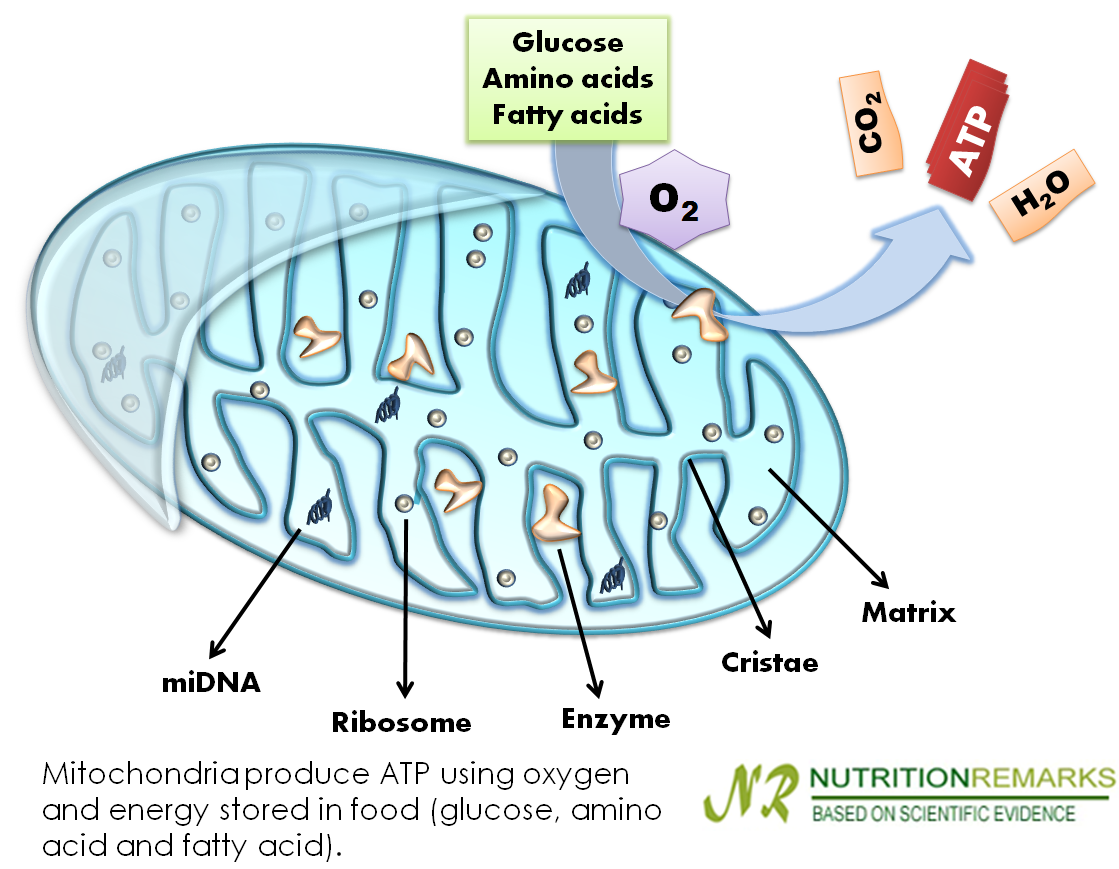
The same process of the candle burning happens in us , except, fortunately for us, on a much slower scale, so we don’t have burning flames within our bodies . That wouldn’t be good! It is still considered burning, though, because it is the exact same process, just slower. All those peanut butter and jelly sandwiches I ate during my school years found their way to my stomach where the food was processed. Carbohydrates like bread has to be broken down in our digestive system into sugar molecules called glucose, which the blood picks up in the small intestine and delivers to all the cells in our body. That’s right, all 40 trillion of them! However, as small as glucose molecules are, (there are around 7,400,000,000,000,000,000,000 of them in a sugar cube) they are still way too large for our cells to extract energy from. They first have to be broken down, and that’s where our hero, the oxygen molecule, comes in.

Upon arrival, the glucose are shipped (by the cell’s FED-EX system) to one of the cell’s many miniature “power-houses” called mitochondria. These have the special job of breaking down glucose molecules into bite size (for the cell) energy packets called adenosine triphosphate (ATP). A shopping list for my 18 year old son includes bacon, burritos, corn dogs, etc. Food shopping for cells is much simpler: ATP. That’s it. ATP’s are what power our cells. Cells without ATP are like cars without gas - they just stop working. The body can store extra food energy in the form of fat, but cells cannot store reserves of ATP. Without a constant supply they begin to shut down and eventually die. Brain cells are some of the first to go because of their great demand for energy. You thought you ate because food tastes so good (which is true) but the real reason is to supply ATP’s to your cells (and also so your body has proteins for building tissue). Ok, enough of that! I thought this was an article about why we need to breathe oxygen to stay alive!
Our Hero: The Oxygen Molecule
The process of converting glucose into ATPs is known as cellular respiration, an amazingly complex series of 20 chemical reactions which we have divided into four stages. During the last stage of cellular respiration, called the Electron Transport Chain (ETC) the majority of ATP’s are produced. (1 glucose molecule can yield 38 ATP molecules, and 34 are produced in the ETC) Here’s how the chain works:
1) Energy from flowing electrons is used to pump H+ ions (protons) from within an inner membrane to the outside.
2) The ion (H+) concentration outside the membrane becomes so much greater than inside that the hydrogen ions make their way back inside the membrane through a channel called ATP synthase which is like a spinning motor.
3) Oxygen atoms grab the electrons at the end of the chain, and then attract two returning H+ ions to make a water molecule (H2O).
4) As these ions travel through the ATP synthase this little motor powers the production of ATP molecules.
Here’s a 2 minute video to watch which helps explain this process. Keep your eyes on the red oxygen molecules to see what they do. As you watch this, ask yourself, could random accidents result in this orderly and purposeful molecular assembly line? One that depends on having the exact right molecules in the exact right places? One that is able to use chemical attractions to produce the exact form of energy our cells need?

Ok, did you see the red oxygen atoms grabbing the electrons and H+ at the end of the chain to beome a water molecule?? If not, watch it again, because this is the whole reason we need to breathe. Why is this critical? If there are no oxygen atoms waiting to grab the electrons at the end of the chain, the whole chain grinds to a halt, and with it, ATP production. No ATP, no energy for cells. No energy for cells means they stop working to carry out vital body processes. That spells trouble!
That is why each of us is always 4-6 minutes away from death. Hypoxia is the term used to describe low levels of oxygen. A person without oxygen for 60 seconds might begin to suffer low levels of brain damage as these all-important cells lose their ability to function. Remember, no oxygen equals no more ATP energy for cells! Somewhere between 1 and 3 minutes without oxygen the average person will lose consciousness. At 4-6 minutes of oxygen deprivation the average person suffers irreversible brain damage, and what is known as brain death. Even if oxygen is reintroduced at this point, patients will typically be in a coma and never regain consciousness. There have been notable exceptions, such as the case of 14 year old John Smith who was trapped under ice in frigid water for 15 minutes, and then miraculously revived after 45 minutes without a pulse. In his case there is no medical explanation for his survival; most believe it was a miraculous act of God. A movie has been made about his experience. (2)

John Smith survived for 15 minutes without oxygen!


“Why oxygen?”, you may ask. What about other gases like nitrogen and carbon dioxide? Are other molecules also capable of performing this service to keep our cells alive? The answer is no, due to a property called electronegativity. Electronegativity refers to how strongly an atom attracts electrons to itself, and that is exactly what oxygen is great at - pulling electrons away from other atoms. (See ** at end of article to learn more about why oxygen is an electronegativity superstar.)
Only the element Fluorine has a higher electronegativity than oxygen, but it is not suited to replace oxygen for two reasons. First, its high reactivity would damage cells, and second, it is not found in the atmosphere. Watch this video to see how fluorine ignites charcoal-just the gas touching the charcoal causes it to burst into flames! Why is it so powerful? Even at room temperature it is able to pull electrons away from the charcoal so they can react with the fluorine.
So, the answer I’m looking for from my students when I ask them, “Why do we need to breathe?” runs something along these lines: “The oxygen we breathe in is taken into our cells where it is used to convert (burn) the food we’ve eaten into the type of energy our cells use in to do their jobs and and keep us alive”.
Take a deep breath. The oxygen molecules you just breathed in are on their way to each cell in your body. Think about these wonderfully designed molecules with their ability to grab electrons from the end of the ETC chain and how your life depends on a steady supply of them to keep that chain going to produce your cells’ never-ending supply of ATP. Thank God for these oxygen molecules that are keeping you alive right now.
God holds your life-breath in His hands!
Endnotes
Chemical Reaction of burning candle: C25H52 + 38O2 = 25CO2 + 26 H2O
Breaththrough: Nothing is Impossible (The Story of John Smith)
** Electronegativity increases based on two factors: an increasing number of protons in the nucleus, and the closeness of its valence electrons to the nucleus (electrons located on the outermost shell). Oxygen scores high on both counts, as its eight protons are in close proximity to its six valence electrons. Having six valence electrons means there is room for another pair of electrons.
Relighting a Candle
Activity 1: (parent supervision for children under 12) Relighting Candle
In a room with still air light a candle. Lower a candle snuffer or other object over the flame to put it out (don’t blow it out). Have a lighter or match already lit, and place in the trail of smoke around 2 inches above the wick. If the smoke is concentrated you will see it ignite and travel down to the wick and relight the candle.
Cellular Respiration Facts: (the process of converting our food into usable energy for our cells)
1) Our bodies produce around their own body weight in ATP every day.
2) A single mitochondria can produce around 10 million ATP molecules each second
3) a single cells possesses between 100- 2,000 mitochondria
4) when a cell uses the ATP energy it converts to ADP. These can then be changed to ATP during cellular respiration.
5) Each glucose molecule that goes through cellular respiration produces around 32-38 ATP molecules.